The Only Living Trusts Book You'll Ever Need
How to make your own living trust, avoid probate, and protect your heirs — in plain English, no attorney required.
Free instant digital access · 30-day money-back guarantee
#1 Best Selling Finance BookWhat Is a Living Trust?
A living trust is a legal arrangement that lets you place your assets — your home, accounts, and property — into a trust you control while you're alive, then pass them directly to your beneficiaries when you die, without going through probate court. It takes effect immediately, stays private, and can be changed anytime.
Families Protected
Copies in homes across America.
Average Rating
From thousands of verified readers.
Verified Reviews
Real readers, real results.
Everything Inside Your Book
The complete living trust blueprint
plus 12 free bonus templates worth $497.The Proven Blueprint
- ✓Probate Avoidance Strategy
- ✓Heirs Protection System
- ✓Advanced Tax Savings
- ✓Trustee Training Guide
12 Free Templates
- ✓Revocable Living Trust
- ✓Pour Over Will
- ✓Durable Power of Attorney
- ✓Last Will and Testament
Secure checkout · Shipped to your door + instant ebook
70% of Americans Have No Estate Plan
When there's no plan in place, families are left to navigate probate court, legal fees, and months of delays — often during the hardest time of their lives. A living trust is how you spare them that.
Written for Real Families, Not Lawyers
Most estate planning advice is written in legalese that leaves you more confused than when you started. This guide is different: clear, step-by-step, and built so you can actually set up your own living trust with confidence.
No $2,000 attorney bill. No jargon. Just a proven system thousands of families have already used.
Living Trust vs. Will: What's the Difference?
A quick side-by-side look at how a living trust compares to relying on a will alone.
|   | Living Trust | Will Only |
|---|---|---|
| Avoids probate court entirely | ||
| Keeps your estate private | ||
| Takes effect immediately if you're incapacitated | ||
| Lower long-term legal and court costs | ||
| Requires court supervision to distribute assets |
Your Estate Plan in 4 Steps
Get the Book
Instant digital access, plus the physical copy shipped to your door within 24 hours.
Follow the Blueprint
Work through the plain-English steps at your own pace — no legal background needed.
Fill In the Templates
Use the 12 attorney-drafted templates to build your living trust and supporting documents.
Protect Your Family
Rest easy knowing your assets, your wishes, and your heirs are protected.
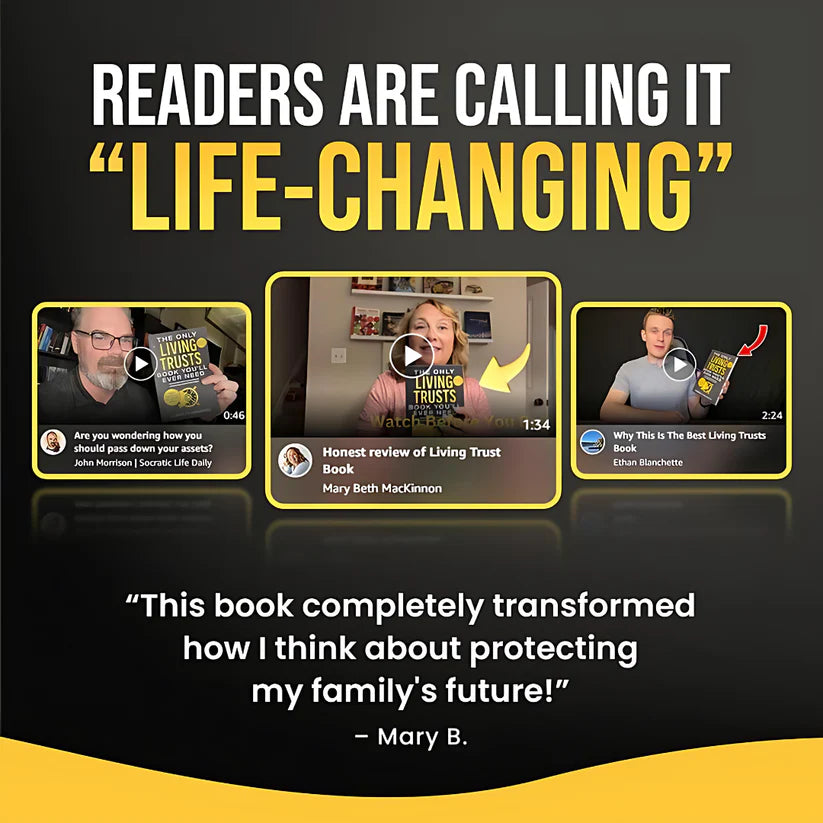
Real Families. Real Protection.
Real People. Real Results.
See what readers are saying about The Only Living Trusts Book.
Frequently Asked Questions
Living Trust Questions, Answered
What is a living trust?
A living trust is a legal arrangement that lets you place assets into a trust during your lifetime and transfer them to your beneficiaries after death without probate court involvement.
How is a living trust different from a will?
A will only takes effect after you die and must go through probate. A living trust takes effect immediately, avoids probate, and keeps the details of your estate private.
Do I still need a will if I have a living trust?
Yes. Most people pair a living trust with a “pour-over will” that catches any assets not already placed in the trust and directs them into it.
How much does it cost to set up a living trust?
Costs vary depending on whether you use an attorney or a guided template system. Attorney-drafted trusts often run $1,500–$3,000 or more, while guided template systems typically cost significantly less.
Does a living trust protect my assets from creditors?
A revocable living trust does not protect assets from creditors during your lifetime, since you retain control of the trust. Creditor protection typically requires an irrevocable trust structure.
Who should consider a living trust?
Homeowners, parents of minor children, and anyone who wants to avoid probate, protect their privacy, or plan for potential incapacity are good candidates for a living trust.
This content is for general educational purposes only and does not constitute legal or financial advice. Please consult a licensed attorney or financial professional regarding your specific situation.